Health and Safety Policy for Landscaping Morden
 This Health and Safety Policy sets out the standards expected across all landscaping Morden activities. It applies to planning, site preparation, planting, turfing, pruning, excavation, hard landscaping, and routine maintenance. The purpose of the policy is to protect employees, contractors, clients, visitors, and members of the public from harm while ensuring that landscaping work is carried out in a controlled and professional way.
Landscaping work can involve manual handling, machinery, sharp tools, uneven ground, weather exposure, and interaction with utilities or traffic. For this reason, every task must be assessed for risk before work begins. A safe system of work is required on all projects, and no job should start until hazards have been identified and suitable precautions are in place.
All workers involved in landscaping services in Morden must understand their responsibilities. They must follow instructions, wear suitable protective equipment, report hazards immediately, and stop work if conditions become unsafe. Managers and supervisors must lead by example, monitor standards, and make sure that work practices remain compliant with this policy.
Core Safety Principles
Risk assessment is central to this policy. Before any landscaping project begins, the work area must be inspected for hazards such as unstable surfaces, buried services, falling objects, moving vehicles, water hazards, or public access routes. Where risks cannot be removed, they must be reduced to the lowest practical level through planning, controls, and supervision.
Personal protective equipment must be selected according to the task. This may include gloves, safety boots, eye protection, ear defenders, high-visibility clothing, and weather-appropriate outerwear. PPE is not a substitute for safe methods, but it provides an essential layer of protection for those carrying out landscaping in Morden and similar outdoor work.
Plant and equipment must be used only by competent people and maintained in safe working order. Defective tools, loose guards, damaged cables, or leaking fuel systems must be removed from service immediately. Powered equipment should be checked before use, stored securely when not in use, and operated in accordance with manufacturer instructions.
 Manual handling is a significant concern in landscaping operations. Workers may need to lift bags, slabs, soil, timber, plants, and machinery attachments. Loads should be assessed before lifting, and team lifting or mechanical aids should be used where necessary. Repetitive movements and awkward postures should also be minimised through good job design and task rotation.
Excavation and groundworks require particular care. Trenches, holes, and edges must be clearly marked and protected to prevent falls or collapse. Before digging, checks must be carried out for underground cables, pipes, and drainage systems. No one should enter an excavation that has not been made safe, and spoil materials should be kept clear of edges to avoid additional risk.
Weather conditions can change the level of danger quickly. Heat, cold, rain, ice, wind, and poor visibility can all affect outdoor landscaping work. Supervisors must adapt work schedules when needed, provide rest breaks, and ensure workers are hydrated and dressed appropriately. In adverse conditions, it may be necessary to suspend work until it is safe to continue.
Workplace Controls and Responsibilities
The organisation will provide information, instruction, training, and supervision necessary to support safe practice. Only trained personnel may operate machinery such as hedge trimmers, mowers, compactors, or cutting tools. Training records should be kept up to date, and refresher sessions should be arranged when equipment, procedures, or site conditions change.
Housekeeping is also important. Tools, hoses, materials, waste, and packaging should not be left in walkways or work zones. A tidy site reduces the chance of slips, trips, cuts, and collisions. Waste should be collected and removed regularly, and sharp or hazardous items must be disposed of safely.
Public protection must be considered wherever work takes place near roads, footpaths, or occupied premises. Barriers, cones, signs, and controlled access points should be used when appropriate. When carrying out landscaping services, workers must remain alert to pedestrians, children, pets, and passing vehicles, and they must never create unnecessary danger for others.
Emergency arrangements must be understood by everyone on site. First aid materials should be available, and at least one competent person should be able to respond to common injuries. In the event of serious harm, fire, spill, or utility strike, work must stop immediately and the correct emergency procedure must be followed. Any incident, near miss, or unsafe condition must be reported and reviewed so that lessons can be learned.
 Environmental protection is also part of safe landscaping practice. Fuel, oils, pesticides, and other substances must be stored and handled carefully to prevent contamination of soil, drains, and watercourses. Refuelling should take place in a controlled manner, and spill kits should be available where substances are used. Chemical products must be used only by authorised workers and in line with the safety information supplied.
Supervisors must ensure that work areas are inspected regularly and that corrective action is taken without delay when standards fall short. This includes checking the condition of access routes, verifying that PPE is worn correctly, and making sure that no worker is pressured to continue unsafe tasks. A positive safety culture is essential to the success of any Landscaping Morden operation.
Monitoring, Review, and Continuous Improvement
This policy will be reviewed periodically and whenever significant changes occur in operations, equipment, staffing, or legal expectations. Reviews should consider incident trends, inspection results, training needs, and feedback from site supervision. The aim is to improve controls continuously and keep safety standards effective and practical.
All workers are expected to cooperate with safety measures and contribute to a careful working environment. Good communication, proper planning, and respectful supervision help prevent accidents and support reliable service delivery. Health and safety is not a separate activity; it is part of every stage of responsible landscaping work.
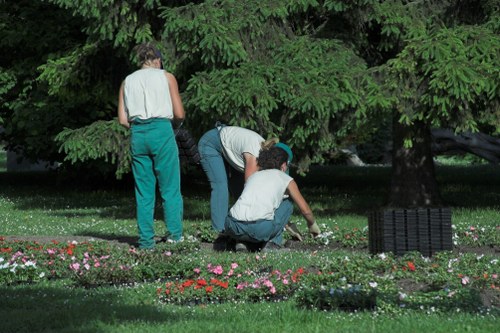 By following this policy, the organisation demonstrates a firm commitment to protecting people and maintaining high standards in landscaping Morden projects. Safe working practices benefit workers, clients, and the wider community by reducing injury, damage, and disruption. Every task should be approached with care, competence, and accountability.
 In conclusion, this policy provides the framework for safe and responsible landscaping operations. It reflects the need for planning, training, supervision, equipment checks, and active risk control. Whether the work involves planting, maintenance, hard surfaces, or machinery use, safety must remain the priority at all times.